

Blogging is the secret weapon of every small business. Tragically, blogging remains a secret weapon because it’s underrated. Most small business owners I encounter believe blogging is that thing of the past, some erstwhile marketing relic of the dot-com era. However, nothing could be further from the truth. In this article, I’m going to convince you that blogging is your most powerful marketing channel. That’s right: not TikTok, not Instagram or Facebook, not Twitter, LinkedIn, or even Google Ads. Nope. Blogging. Here at Outset Web Design, we know firsthand the reliability and utility of blogs for a small business. Blogging is cheaper, more reliable, and a far better investment of your time than social media. Now, to be clear, I’m not saying you can’t grow your business with social media. You could. Many do. But your blog should be the foundation of your digital marketing strategy. Throughout this series, we’ll explain three facets of blogging as a small business owner.
Why Every Small Business Needs a Blog
In this article, you’ll learn compelling reasons why blogging is your superior marketing tool. While we’ll get into the specifics in the actual article, the meat of the matter boils down to this: If you invest money or time in marketing your business, you want that investment to last. Social media posts or ads quickly lose relevance. However, a blog article doesn’t.
Blogging is a superior marketing tool for a small business because it is not like social media posts, which quickly lose relevance. A blog article provides a long-term investment that attracts customers for years.
So long as you write for your customers, a blog article will garner customers for you for years. Sure. Many spend their time idling away on social media. Yet, when people want to buy something or research a service, most interested buyers use the good old Google search (Yes, like the one in the image below).

Google has dominated the world through the reliability and ubiquity of its search engine. You know, that thing we use weekly, daily, or hourly. Google Search employs advanced algorithms to deliver search results to its users. The way your blog can snag you more customers is by having blog articles among those results. The logic is simple. Write the services or products your customers are already paying you for. Then, as people search for those services online, they’ll find an article about that topic.
Am I oversimplifying this? No. I’m really not. Sure. There are bad, good, and best ways to blog. But that’s the gist of it. If people search the internet for something useful, and you’ve written something useful on that topic, you’re in luck. The more you’ve written on said topic, the more likely it is that customers will land on your site. Now, regarding the bad and best ways to go about blogging…
Best Practices on Small Business Blogging
If you’re serious about blogging (i.e., you want to use it to get clients), you’ll appreciate this post. Let’s say you’re willing to blog and throw your whole heart (or at least part of it) into it. If that’s the case, you want to start with a reliable foundation of sound blogging principles. Just as some exercise is better for your body than none, the reality stands that effective exercise yields more net advantages than ineffective workouts. The same holds true for blogging. In this post, you’ll learn how to make your blogging efforts more strategic. Here are a few techniques you’ll learn when you arrive at this post:
- Write Your Blogs in a Series: Don’t create stand-alone articles.
- Use Headings: Help skimming readers navigate your content.
- Write What the Data Tells You: Not what you want.
(THIS ^ THIS ^ THIS ^)
Some of those principles might be obvious; others might raise some eyebrows. However, rest assured, I’ve used all of them to grow multiple businesses. And no, I’m not a web developer. I couldn’t code in Java or Python to save my life. I know just enough HTML to avoid napalm-blasting my computer when I blog. Other than that, I’m a luddite, dear reader. I have the technical acumen of a mountain man. If I use these blogging best practices to grow a business, you certainly can.
A Guide to Small Business Blogging Using Data
Remember the last bullet point from the list above?
Write what the data tells you, not what you want.
Tattoo those words onto your retinas, brain, and forehead, because it’s vital. If you’re a small business owner, why are you interested in blogging in the first place? I bet I can guess it.
To attract more customers in order to make more money.
Am I close? If I’m not, this probably isn’t the article for you. Blogging is a crucial part of the two businesses I own. It’s one of my most reliable sources of customers. This is intentional, not an accidental occurrence. If my ultimate goal is to blog to attract more customers, I’m thus incentivized to write articles about topics my future customers are interested in.
Google Search Console helps a small business blog grow because it allows you to see exactly what keywords customers type in to find your website, which tells you exactly what your next blog should be.
Google Search Console is a powerful, free resource available to anyone with a website. If you are a blogger or an aspiring one, you should have Google Search Console installed on your website. With it, you can see EXACTLY what keywords customers type in to find your website. Yes. You read that right. GOOGLE SEARCH CONSOLE tells you what your next blog should be (see image below).
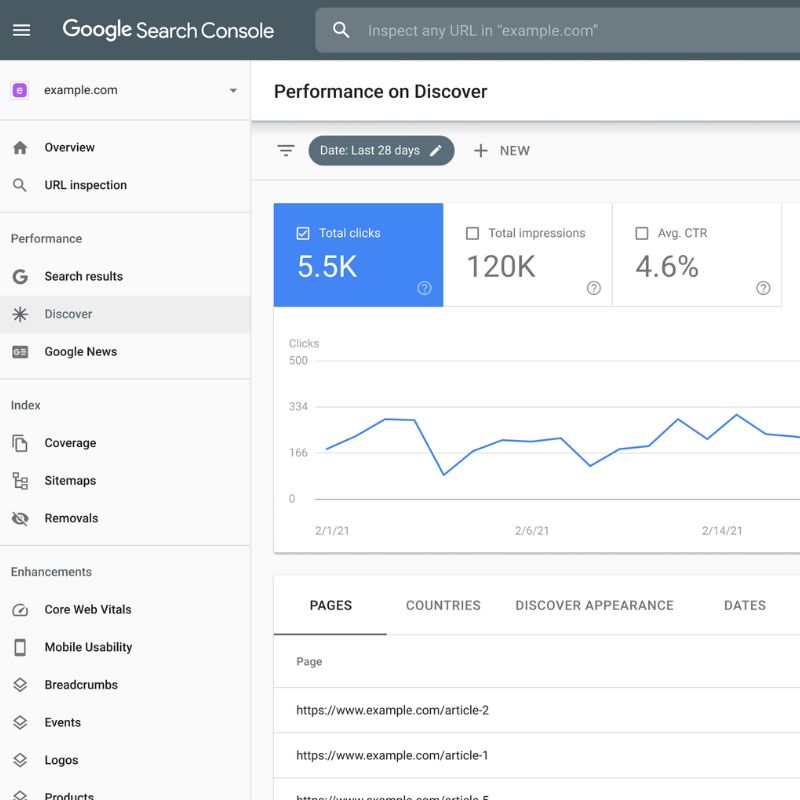
Knowing the keywords visitors type in to find your site incentivizes you to write about them. Thus, data should always inform your next blog. There are rarely exceptions to this rule. Yes. Some outliers exist. But those are outliers: exceptions to the rule in every sense of the word. In the Small Business Data Blogging article, you’ll learn how to use Google Search Console. With this tool at your disposal and a normal publishing schedule, your blog will flourish.
Conclusion
So, does blogging interest you? Would you like to know how to grow your own business without paying for advertisements? Would you like to invest time in your business that keeps paying dividends and growing your customer base? If your answer to any of these is a resounding or even tentative “yes,” then read on. You’ve come to the right place. Additionally, if you’d like to hire one of our web developers to help grow your business, schedule a free consultation by clicking the link below.
Talk soon,
-Marc and Joe